

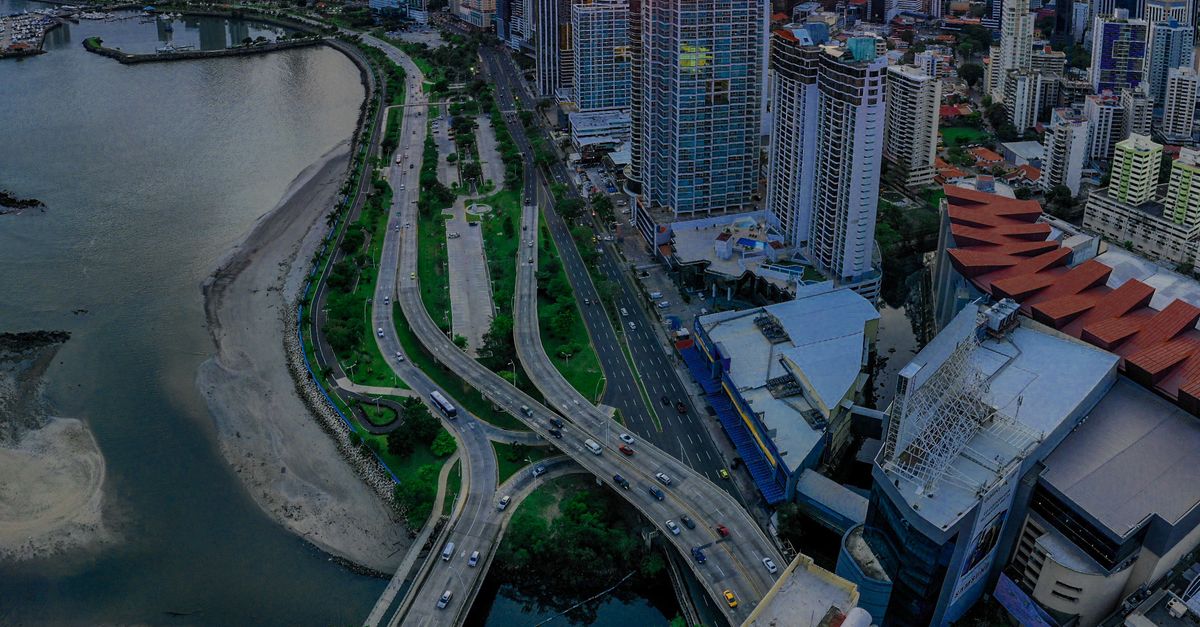
Panama City is the commercial and logistics heart of Panama and one of the Western Hemisphere’s critical transshipment and distribution hubs. Its strategic advantage is geographic: immediate access to the Panama Canal, a trans-isthmian rail corridor, major container terminals on both Atlantic and Pacific sides, and Tocumen International Airport for air cargo. Investors evaluate ports, warehousing, and last-mile networks in Panama City through a combined lens of throughput capacity, operational efficiency, regulatory environment, and end-customer delivery performance.
What investors look for in ports
Investors evaluating port assets or logistics operations linked to port activities tend to focus on tangible operational and commercial characteristics
- Channel and berth specifications: berth depth (meters), quay length, and turning basin dimensions determine which vessel classes (Panamax, Neopanamax) can call without restrictions.
- Cranes and handling equipment: ship-to-shore crane numbers and outreach, yard gantries, and container handling productivity (moves per hour) are direct determinants of vessel service times and port competitiveness.
- Throughput and capacity metrics: annual TEU handling, yard capacity (TEU slots), on-dock rail or rail transfer capability, and berth occupancy rates inform scalability and congestion risk.
- Intermodal connectivity: rail link quality (Panama Railway corridor across the isthmus), highway access to metropolitan and interior markets, and proximity to Tocumen air cargo facilities reduce modal transfer times and costs.
- Customs, regulatory environment, and special regimes: speed of customs clearance, availability of bonded storage/free zone status, use of single-window electronic systems, and customs-owned vs. private terminal management affect dwell times and cash flow.
- Terminal operator profile: presence of experienced international operators and long-term concession frameworks influences operational standards, investment willingness, and predictable tariff structures.
- Resilience and maintenance: dredging schedules, breakwater protection, flood and storm defenses, and contingency plans for canal congestion or labor actions.
- Environmental and social license: compliance with ISPS and environmental regulations, community relations, and mitigation strategies for dredging or expansion projects.
Example context: Investors in Panama City tend to prioritize terminals with deep drafts that can handle Neopanamax vessels navigating the post-expansion Panama Canal, rapid truck processing measured in minutes, and integrated on-dock or nearby facilities that support cross-docking and short-haul rail links between Pacific and Atlantic terminals.
What investors look for in warehousing
Warehousing is assessed on how effectively it underpins supply chain strategies such as just-in-time, inventory buffering, cold chain operations, and e-commerce.
- Location and proximity: distance to the main port (Balboa on the Pacific side for Panama City), to Tocumen Airport, and to high-demand urban neighborhoods. Short drayage reduces cost and improves responsiveness.
- Facility specifications: ceiling height (meters), clear column spacing, floor load capacity (kg/m2), dock door count and configuration, cross-dock lanes, mezzanine options, and ability to install high-density racking or automation.
- Climate control and specialized storage: cold storage capacity (m3), pharmaceutical-grade clean rooms, humidity control, and backup power for temperature integrity—critical for food and pharma serving Central and South American markets.
- Technology and systems: WMS integration, real-time inventory visibility, barcode/RFID readiness, API connectivity for carriers and marketplaces, and support for e-fulfillment systems and micro-fulfillment centers.
- Security and compliance: perimeter security, CCTV and access control, ISPS/ISO standards, bonded warehouse licensing, and compliance with pharmaceuticals and food safety regulations.
- Lease terms and land availability: long-term, indexed leases, build-to-suit options, availability of industrial land for expansion, and clarity on permitting timelines.
- Costs and utilities: reliable power with backup generation, fuel access, water, and logistics service costs including labor rates and productivity.
- Labor skills and availability: experienced warehouse workforce, availability of technical maintenance staff for cold chain and automation, and labor stability.
Data-driven example: Investors often estimate returns by analyzing metrics like throughput handled per dock door each shift, hourly order-line processing, annual storage turnover, and overall occupancy levels. In Panama City, demand is shaped by regional transshipment activity, duty-free re-export operations linked to the Colón Free Zone, and the expanding footprint of e-commerce across Central America.
What investors look for in last-mile networks
Last-mile effectiveness in Panama City determines customer satisfaction and urban delivery economics:
- Urban density and delivery zones: identifying demand hotspots across central business districts, upscale suburbs, and growing residential areas to strategically position micro-hubs.
- Traffic patterns and delivery windows: congestion levels, peak activity periods, and city curbside regulations shape routing methods, vehicle deployment, and timetable planning.
- Fleet mix and asset strategy: blending vans, compact trucks, motorcycles, electric cargo bikes, and parcel lockers to balance delivery costs with environmental performance.
- Micro-fulfillment centers (MFCs): compact automated or semi-automated sites located within or close to urban zones to shorten final-mile routes and support same-day or rapid two-hour delivery options.
- Technology and customer experience: tools such as live tracking, selectable delivery slots, integrated proof-of-delivery, return flows management, and APIs connecting marketplaces and retailers.
- Partnerships with carriers: the role and capacity of global carriers (including integrators), neighborhood couriers, marketplaces, and supermarket chains supporting dark-store or click-and-collect operations.
- Regulation and public policy: city rules on vehicle entry, designated low-emission districts, and programs encouraging electric fleets and shared curbside consolidation zones.
Panama City-specific nuance: compact urban geography and growing middle-class e-commerce demand favor MFCs and parcel locker networks. Investors assess parking availability, loading zone enforcement, and the cost/time of urban deliveries to set pricing and service levels.
Case examples and market signals
- Trans-isthmian integration: the Panama Railway corridor linking the Atlantic and Pacific ports is regarded as a vital asset for swift transshipment and cross-dock operations, and investors tend to prioritize terminals featuring direct rail connections or minimal rail drayage distances.
- Free zone leverage: the Colón Free Zone continues to act as a key driver for re-export and distribution activities; warehousing and value-added processes such as kitting or light assembly inside these zones help lower duty exposure and ease working capital pressures.
- Cold chain projects: increasing flows of pharmaceuticals and perishable foods have spurred the development of advanced cold storage facilities near Panama City and Tocumen Airport to support regional freight forwarders and air cargo movements.
- E-commerce-driven micro-hubs: retailers and online marketplaces in Panama City are progressively adopting compact urban warehouses or dark stores to achieve same-day delivery, while investors prefer adaptable leasable areas with rapid deployment potential.
Risks investors must quantify and mitigate
- Operational congestion and canal sensitivity: seasonal shifts or geopolitical pressures that disrupt canal passages can cascade into altered port timetables and reduced vessel slot dependability, while maintaining contingency capacity and varied berthing helps limit these vulnerabilities.
- Regulatory and permitting delays: environmental reviews, land-title verification, and municipal authorization processes may prolong development timelines and elevate overall costs.
- Currency and fiscal policy: adjustments in tax incentives, tariff structures, or concession terms shape long-range projections, and agreements often incorporate stable concession frameworks or currency hedging mechanisms.
- Labor disputes and productivity: labor-related disruptions or diminished workforce efficiency can lengthen dwell times, so investor assessments typically examine labor relations records and productivity benchmarks.
- Climate and resilience: intense rainfall or localized flooding demands robust drainage systems, while sea-level trends influence the long-term placement of coastal infrastructure.
- Market concentration risk: strong reliance on transshipment activity or a single dominant terminal operator heightens counterparty exposure, prompting diversification through multi-terminal arrangements and multimodal routing alternatives.
Operational and financial metrics investors demand
Investors build models using specific KPIs and thresholds:
- Port KPIs: annual TEU volume managed, berth usage rate (%), typical vessel turnaround duration (hours), average truck processing time (minutes), cargo dwell span (days), and daily container holding costs.
- Warehouse KPIs: facility occupancy level (%), hourly order line handling, per-order pick-and-pack expense, yearly storage rotation, monthly pallet storage cost, and electricity plus cooling expenditure per cubic meter.
- Last-mile KPIs: delivery cost per parcel, first-attempt success rate (%), mean delivery window (hours from purchase), parcels handled per stop, fleet usage efficiency (%), and the time required to process returns.
- Financial KPIs: revenue per square meter, IRR objectives, exposure to lease rollovers, capex recovery tied to operational efficiency, and sensitivity modeling for labor, fuel, and canal throughput changes.
Practical investment checklist for Panama City logistics assets
- Check berth draft requirements, planned dredging cycles, and any limitations tied to canal navigation.
- Verify agreements with terminal operators, the duration of concessions, and terms governing tariff adjustments.
- Review rail and highway links, expected truck turnaround performance, and the cost implications of local congestion for proposed sites.
- Inspect readiness for WMS/TMS interoperability and confirm API compatibility with major carriers and key marketplaces.
- Analyze cold chain resilience, including emergency power availability, monitoring infrastructure, and established contingency measures.
- Obtain authorized land or secure long-term leasing options and outline permit milestones for future expansion or refurbishment.
- Simulate varied demand pathways such as transshipment-driven flows, regional redistribution models, and e-commerce-led growth.
- Prepare environmental and social management actions, addressing community impact reduction and workforce development initiatives.
Investing in Panama City’s logistics ecosystem calls for matching global trade dynamics with on-the-ground operational needs: ports are expected to provide deep-water access, rapid equipment throughput, and efficient customs interactions; warehouses must deliver strategic locations, precise technical features, and tech-driven adaptability for cold chain operations and e-commerce; last-mile networks rely on urban intelligence, diverse vehicle fleets, and micro-hub models to handle tight delivery schedules. The most compelling investment opportunities merge proximity to canal-connected terminals and airport infrastructure with strong digital links, clear regulatory frameworks, and robust resilience measures, shaping logistics platforms that transform Panama City’s geographic edge into reliable and scalable returns.


.jpg "What investors should consider before setting up a Panama offshore company")
.jpg "Understanding Panama pensionado visa for US and Canadian retirees with real estate or spouse")